
Early Treatment
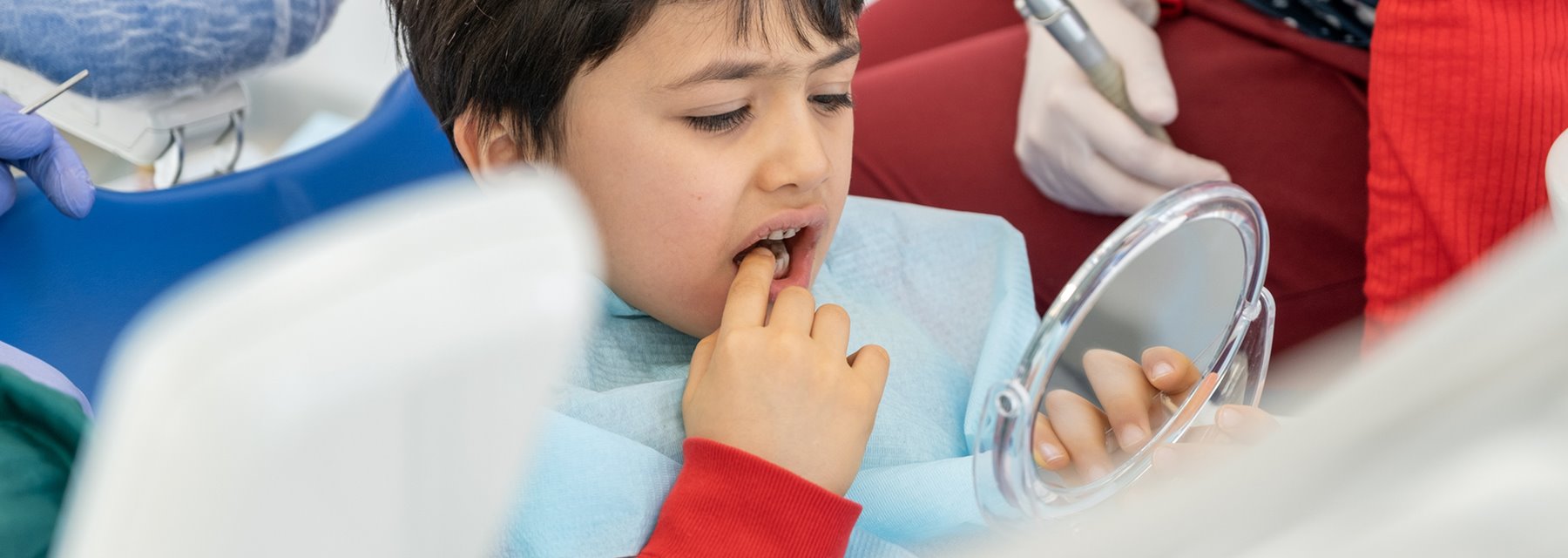
You probably know that it's never too late to begin orthodontic treatment — but when it comes to your youngster's teeth, did you know that earlier may be better than later? According to the American Association of Orthodontists, kids should have an initial orthodontic screening at age 7. What makes early evaluation — and potentially, early treatment — so important?
Earlier Treatment

The sucking reflex is natural in early childhood; it usually disappears between ages 2 and 4. But if it persists much later, the pressure of the digit on the front teeth and the upper jaw can actually cause the teeth to move apart and the jaws to change shape. This can lead to the orthodontic problem called "open bite," and may impair speech. An open bite can also be caused by the force of the tongue pushing forward against the teeth (tongue thrusting).
Mouth breathing — an abnormal breathing pattern in which the mouth always remains open, passing air directly to the lungs — is related to alterations in the muscular function of the tongue and face. It may cause the upper and lower jaw to grow abnormally, which can lead to serious orthodontic problems. Although mouth breathing may start from a physical difficulty, it can become a habitual action that's hard to break.
Various orthodontic treatments are available to help correct these parafunctional habits — and the sooner they're taken care of, the less damage they may cause. But these potential problems aren't always easy to recognize. That's one more reason why you should bring your child in for an early orthodontic screening.
Related Articles